
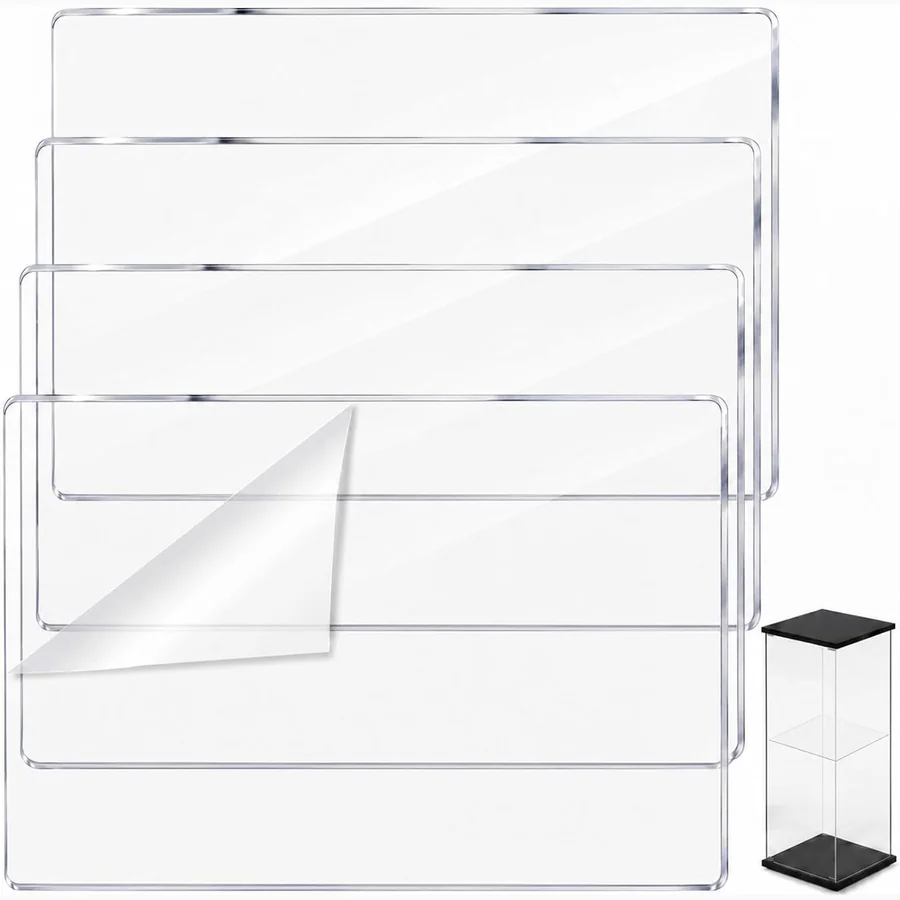
Thyle 4-Pack Acrylic Shelf
Four transparent acrylic inserts sized for Detolf cabinets when you want more shelves in one order.
Check PriceCollectors and hobbyists rely on exact measurements to plan displays, order replacement glass, or build custom accessories. This guide breaks down the IKEA Detolf glass cabinet’s interior volume, shelf pin geometry, individual glass sizes, door swing, and base and top cap— in centimetres and inches.
Browse Options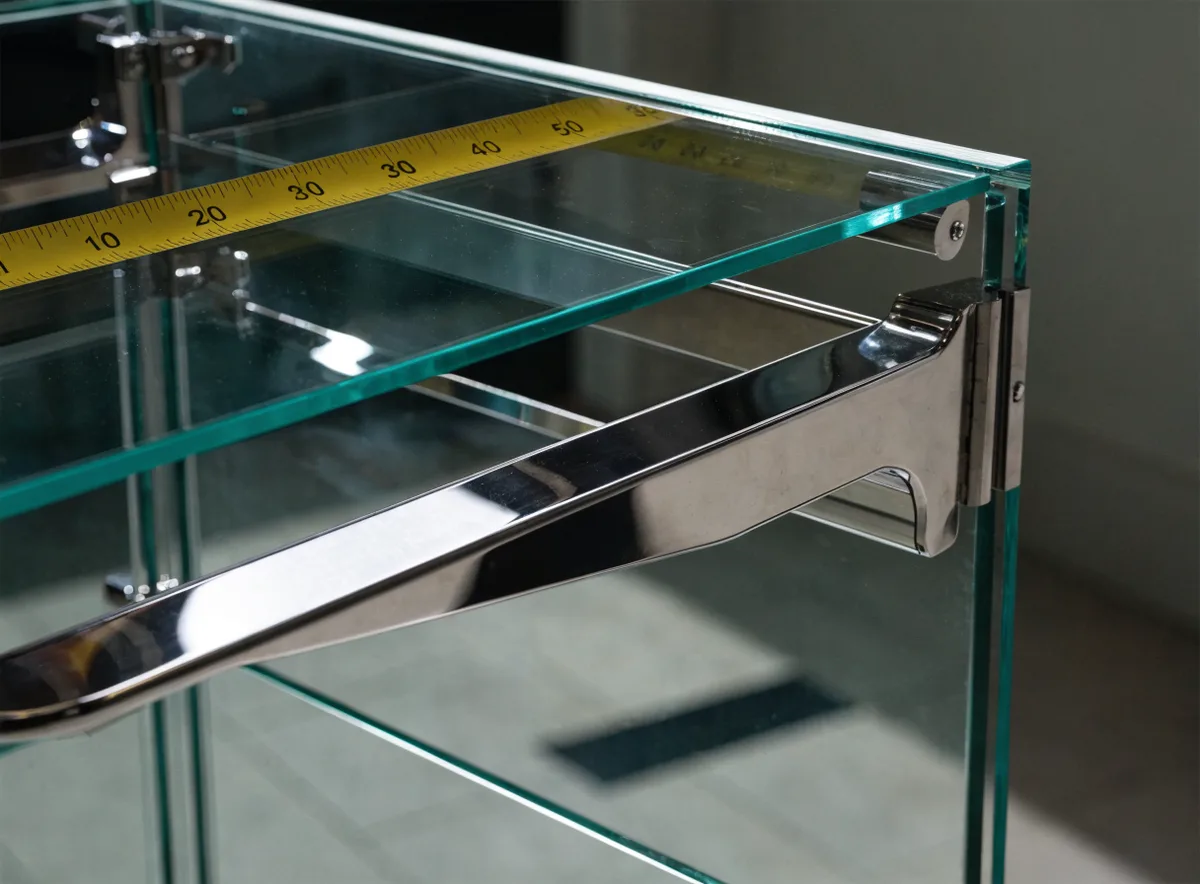
Accessories selected with Detolf shelf spacing and footprint in mind.
Four transparent acrylic inserts sized for Detolf cabinets when you want more shelves in one order.
Check Price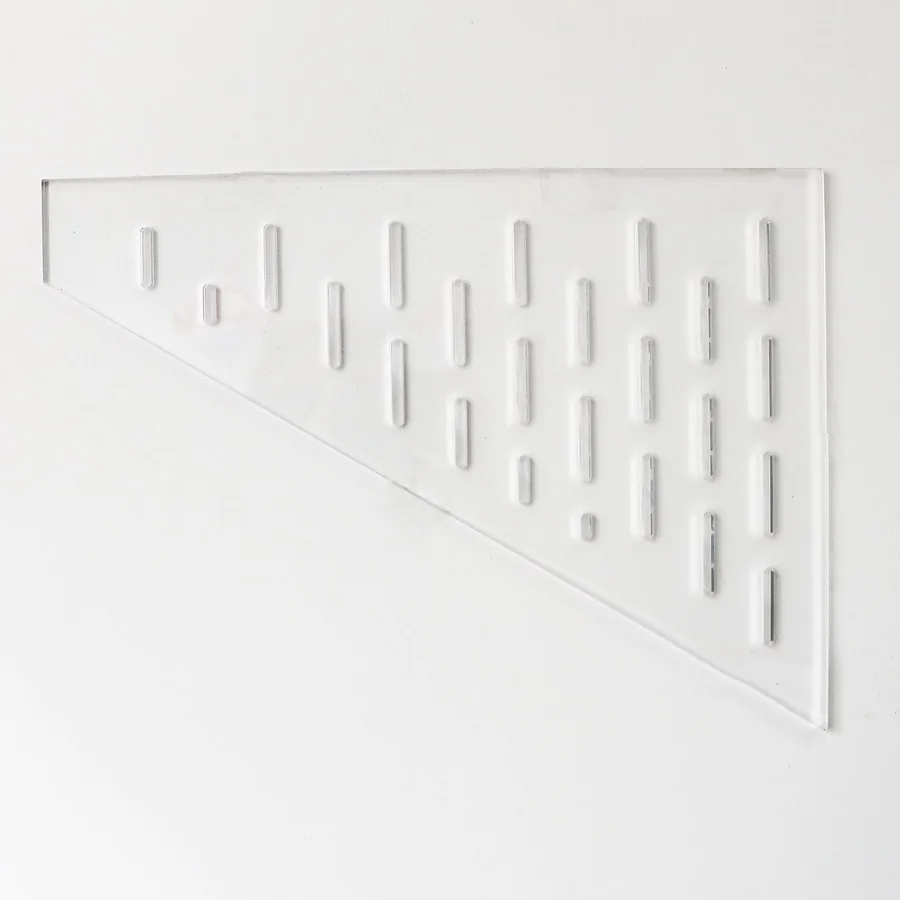
Triangular acrylic corner shelves that free center space in a Detolf for taller figures or props.
Check Price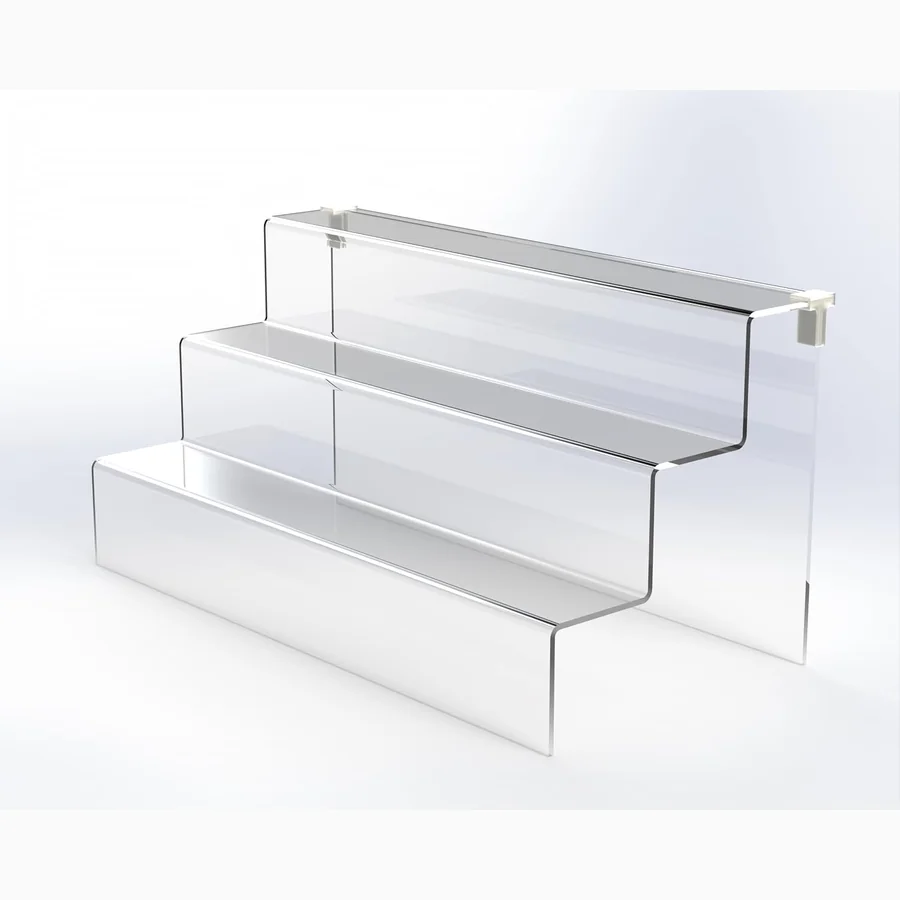
A clear three-step riser cut for Detolf shelves so back-row figures stay visible without crowding.
Check Price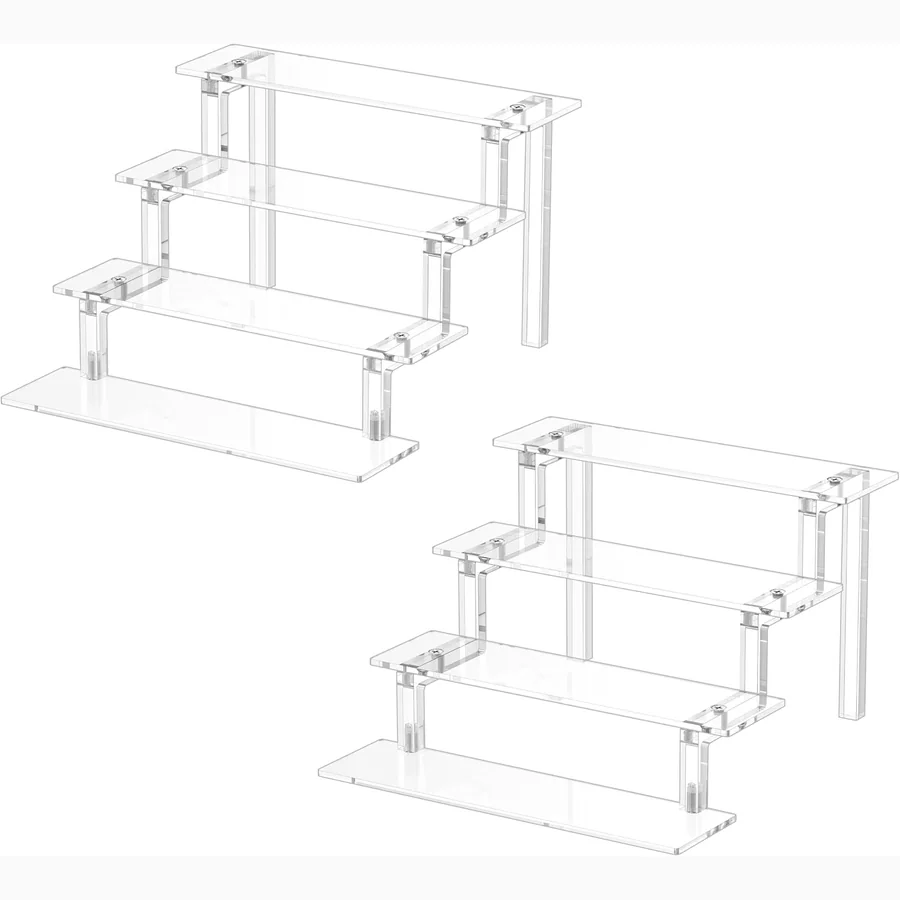
A compact acrylic riser set that works on Detolf shelves for perfume bottles, figures, and small props.
Check PriceThe Detolf’s famous footprint is 43 cm wide, 37 cm deep, and 163 cm tall on the outside, but the space where your figures and models live is slightly smaller. After the tempered glass sides, back, and metal uprights, the usable interior width is about 38.5 cm (15.2 inches). The usable depth is roughly 33 cm (13 inches) front to back on each shelf level.
Vertical clearance depends on how you place the four adjustable glass shelves. With shelves evenly distributed in the main column, many users see approximately 28 cm (11 inches) between shelf surfaces. The bottom compartment sits above the raised base; the top compartment sits below the top cap and hinge rail. Measuring your own unit with a tape measure after assembly is the most reliable way to confirm heights for unusually tall statues or stacked risers.
Always record inside dimensions at the narrowest point, usually beside the shelf pins or door gasket, so acrylic steps and LED strips do not bind when the door closes.
The Detolf uses small metal shelf pins that seat in punched holes along the inner faces of the vertical metal profiles. These holes follow a regular vertical pitch, commonly about 32 mm between adjacent positions on many production runs—enough granularity to nudge shelf height for LEGO modulars, 1/6 scale figures, or model aircraft with tall tails.
Count holes from a fixed reference, such as the bottom of the glass side panel channel, before moving every shelf. That habit prevents uneven tiers and reduces stress on the glass. If you remove a shelf entirely, store the pins in a small cup so they are not lost; missing pins force unsafe stacking or uneven loads.
Third-party acrylic shelves or wood inserts must respect the same span between supports. Overhanging a rigid panel without a pin under each corner can bow the material or overload the glass below.
~38.5 cm
Usable width (~15.2")
~33 cm
Usable depth (~13")
~28 cm
Typical shelf gap (~11")
The Detolf is an all-glass showcase: two side panels, one full back, a hinged door, four shelves, and a fixed top glazed panel set into the upper frame. Nominal thickness for structural panels and shelves is about 5 mm tempered glass. Exact cut sizes vary slightly by manufacturing batch, which is why IKEA lists part numbers for replacements instead of DIY generic rectangles.
Conceptually, the door and back are tall rectangles matching the cabinet height minus the base and top assembly; the side panels run the same vertical span with a depth matching the cabinet depth. Shelves are slightly under the interior width so they slide in without binding. If you measure a broken panel, capture length, width, and edge finish (flat polish vs notch for hinges).
Never substitute annealed float glass; tempered safety glass is required so shards are small and blunt if breakage occurs.
The door is hinged on the right on standard Detolf units and swings outward in an arc nearly as wide as the cabinet depth. Reserve at least 40 cm (15.7 inches) of free floor space straight ahead so the door opens fully for cleaning and arranging large pieces. Tighter clearances risk handle impact against adjacent cases or walls.
If you line up multiple Detolfs, stagger hinges or leave wider aisles so neighbouring doors never clash. Measure from the front plane of the glass side to the nearest obstacle, not just the metal base edge.
Automated lighting cables should exit the rear or a low corner so they do not snag the door sweep zone.
The plinth-style base lifts the glass box a few centimetres off the floor, hiding minor unevenness and providing screw points into the lower metal frame. The base footprint matches the cabinet’s 43 by 37 cm outline; add a few millimetres if you include plastic feet or felt pads.
The top cap bridges the uprights, captures the upper glass, and anchors the door hinge body. Total exterior height 163 cm includes these elements. If you build a custom crown moulding or stack lighting, measure from the finished floor to the ceiling and subtract the full height plus any seismic strap clearance your landlord requires.
For wall anchoring kits, follow the manufacturer’s offset; the Detolf is tall and narrow, so anti-tip restraint is wise in homes with children or pets.
The Detolf sits in a sweet spot: slimmer than many wide curio cabinets but taller than countertop cases. Competing IKEA lines and third-party glass towers may advertise “similar” looks yet differ by several centimetres in width or shelf count. A case that is even 2 cm narrower inside can block double-rows of blister cards or wide vehicle models.
Before buying a non-Detolf alternative, compare interior width, shelf load rating, and hinge side. Some units use thicker metal uprights that eat visible space; others add wooden frames that reduce transparency. Collectors who need identical modular walls often stick with true Detolf dimensions for visual rhythm.
If you need a different width or depth, compare interior numbers on any candidate cabinet before you buy; many glass towers look similar but differ by a few centimetres that matter for modular display walls.
When ordering custom acrylic tiers, supply the interior width and depth minus at least 2–3 mm per side for thermal expansion and easy insertion. For routed LED channels, account for the thickness of the strip plus diffuser so the assembly still clears the door gasket.
Use a carpenter’s square to confirm the cabinet is plumb; twisted frames make diagonal shelf measurements disagree corner to corner. If you fabricate wood inserts, seal edges against humidity swings. Weigh displays and stay within the recommended per-shelf load, spreading weight across the glass.
Photograph pin hole counts and metric readings before disassembly for moves; that archive speeds reassembly and insurance claims.
The usable interior is approximately 38.5 cm (15.2 in) wide and 33 cm (13 in) deep, after accounting for glass thickness and metal uprights.
Holes run at a regular vertical pitch (often about 32 mm between positions) along the metal supports, letting you fine-tune shelf height for tall collectibles.
Plan for at least 40 cm (15.7 in) of clear space in front so the hinged glass door swings fully without hitting walls or another cabinet.
Panels are sized for the Detolf frame. Other cases use different widths and hole patterns; match official part numbers or measure openings before ordering replacements.
Now that you know the exact dimensions, explore where to buy a Detolf or discover similar alternatives that fit your space.